It’s the beginning of the year and a good time to share my experience of adopting new (good) habits. I don’t mean those vague resolutions that have a life expectancy about as long as a Christmas card. I mean real behaviour change.
Before we get to new habits, let’s zoom out and go back a few years. When became a freelancer in 2007, I began looking at how to improve my productivity, “manage” my time and, above all, reduce my mental load. I was setting up my translation business, studying for a master’s degree by distance learning, overseeing a major home renovation and parenting two young children.
Finding and applying the Getting Things Done (GTD) method changed the way I work, and the way I approach any potential task that comes my way, at home and at work. It was such a revolution that later on I felt compelled to teach the method. These days I lead training in LeviMensa a French method of organisation, which has a similar approach to GTD and also looks at how to acquire new habits. Having tested the three-step recipe many times, I can tell you that it works, and also that the results are even more spectacular with a little preparatory reflection.
Why and how to build lasting habits in your daily life
Define your “why” to give meaning to your actions
With practice, I’ve learned that deciding what to do, when, is the last stage in a process. The effectiveness of my daily to do list depends on my upstream thinking: the answer to Why?, the meaning I give to my life. I know, that sounds rather profound for a few tick boxes. Suffice to say that once you’ve done that thinking, it’s done, and you only need to tweak it once in a while. Also, the exercise is far from unpleasant. I recommend Simon Sinek’s book Start with Why to talk you through the process
Turn your long-term vision into concrete goals
Once you establish your raison d’être, you can come back to earth and set your sights on what your life will look like in 5-10 years’ time. What will you be doing? With whom? Where? Etc. Your vision can take the form of a mood board or a mind map.
Once you have a vision, you can set yourself targets to help you get to where you want to be. If you want to be vegetarian a few years down line, you could start by not eating meat at home, for example. Or, to become number one in France, you set yourself the target of gaining X percentage of market share in the next two years.
Then come your areas of responsibility, the duties that come with the roles that you play: wife, mother, sister, daughter, friend, club member, neighbour, business owner (and all the associated hats), committed citizen, etc. In principle, every item on your to do list is related to one of your roles.
From vision to action: structuring your projects effectively
Relationships, personal and professional development and goals to be achieved can all be divided into projects to be managed. And projects are split into individual actions. Therefore, your to do list corresponds to a much higher level of expectation than may appear at first sight. It reflects your vision, it answers your “why?”.
So, what’s behind your daily to do list? Taking the time to review what’s on your plate from a higher level is a great way of determining what’s really important to you.
A simple method to build habits and create lasting behaviour change
Now, let’s examine the actions you want to sustain over time to achieve your goals and ideals: habits.
Understanding how habits and the brain work
A habit is second nature, something you do automatically, without thinking. An automated task – your natural IA!
The human brain likes retracing paths. It uses less energy than breaking new ground. Don’t get the wrong idea here. It’s not laziness, it’s efficiency. Energy is necessary for survival, so we’re wired to use it sparsely. Thinking is thirsty work. Which is why it’s in our interest to repeat routines, to make habits so we can act without wasting too much brain power.
We are what we repeatedly do. Excellence, then, is not an act, but a habit, according to Aristotle.
The B.J. Fogg method to build new habits
More recently, B.J. Fogg of Stanford University, a specialist in individual behaviour found that the elements that trigger behaviour can be expressed as an equation: B=MAP. For Behaviour to happen, Motivation, Ability and a Prompt must come together. Fogg’s book Tiny Habits offers a detailed approach to behaviour change.
In a nutshell, to make a habit, your motivation needs to be strong, the action needs to be easy to do and you need a prompt. For example, I want to live to a ripe old age in good health. I know that hip flexibility influences mobility in old age. So, I reckon it’s a good idea to make sure my hips stay supple, starting now.
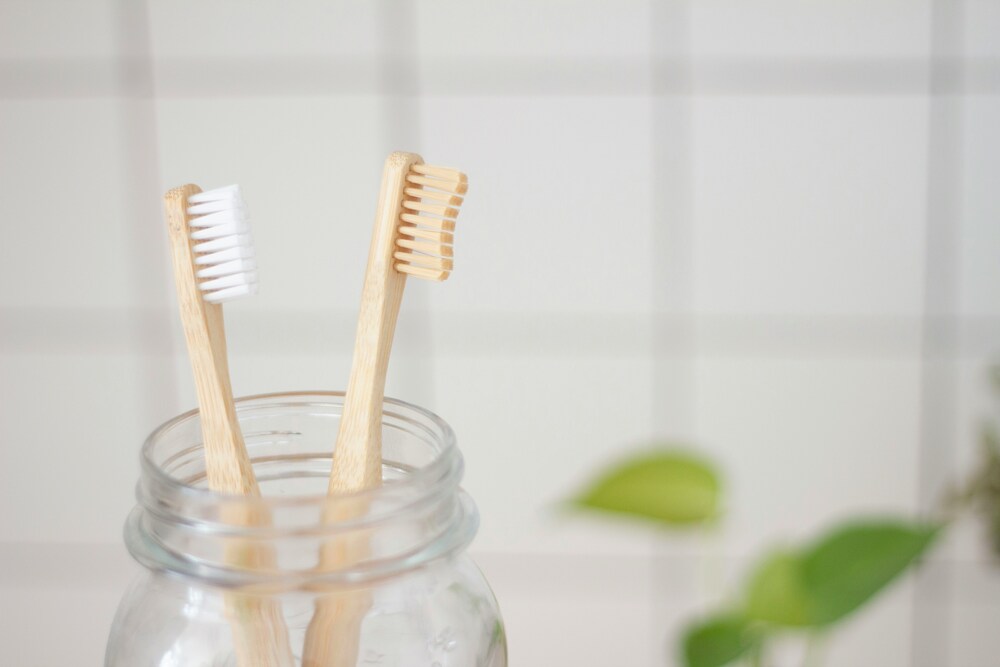
To anchor the habit, I decided to link my hip stretch to a well-established habit: brushing my teeth. Every morning, prompted by seeing the toothpaste on my tooth brush, I do my hip stretch, which isn’t difficult, while I brush my teeth. Yes, I can do both at the same time!
There’s a relationship between motivation and ability. If motivation is high and the action is easy to do, when prompted the behaviour will happen, as in my example above. However, had I not been motivated, and the stretch difficult, I would just brush my teeth without doing the exercise. In short, for the behaviour to happen, motivation needs to increase, or the action needs to be easier, or both. According to Fogg, this model applies to all human behaviour. When the three elements come together, we act. If one of them is missing, we don’t.
Start small to build lasting habits
It’s interesting to note the snowball effect here. You can start small and gradually extend, or multiply your habit. To begin with, you can commit to something really small. I mean, make it as easy to do and not to do. For example, if your goal is to run 5k, you could start by just putting your running shoes on at the prompt. Once you’ve established that habit, then you can walk to the end of the road, then alternate walking and running for a few minutes, etc.
And don’t forget to celebrate. No need for champagne. Just a smile, a “yes!” or however you want your brain to acknowledge your triumph, so you wire in the desire to repeat the action.
Try it! I suggest starting by examining what you really want in life, then where you want to be in the next few years. Then decide on a habit that would make a difference to your life plan and apply B.J Fogg’s three-step plan. Write it down as follows:
- After I… (already established habit)
- I will… (tiny habit)
- And then I will celebrate by…
Let me know how you get on!